Client:
Quantity:
Size:
Application:
Agricultural processing facilities often operate at a massive scale, where the difference between profitability and loss frequently comes down to equipment reliability. When handling high volumes of abrasive materials like soybean seed and meal, standard off-the-shelf components rarely offer the longevity required for continuous operation.
The Challenge of Abrasive Agricultural Bulk
Processing soybeans presents a specific set of engineering challenges. While individual grains may seem innocuous, the cumulative effect of millions of bushels of soybean seed and meal flowing through a gravity-fed system acts like sandpaper on equipment surfaces. Impact points and sliding friction create significant wear, particularly at diversion points where material direction changes.
For this specific facility, the goal was not just to move material, but to create a system infrastructure capable of withstanding years of heavy-duty abuse without requiring frequent, costly shutdowns for repairs. The operators needed a solution that addressed the abrasive nature of the product while accommodating the massive throughput required by their production lines.
A Custom-Engineered Solution
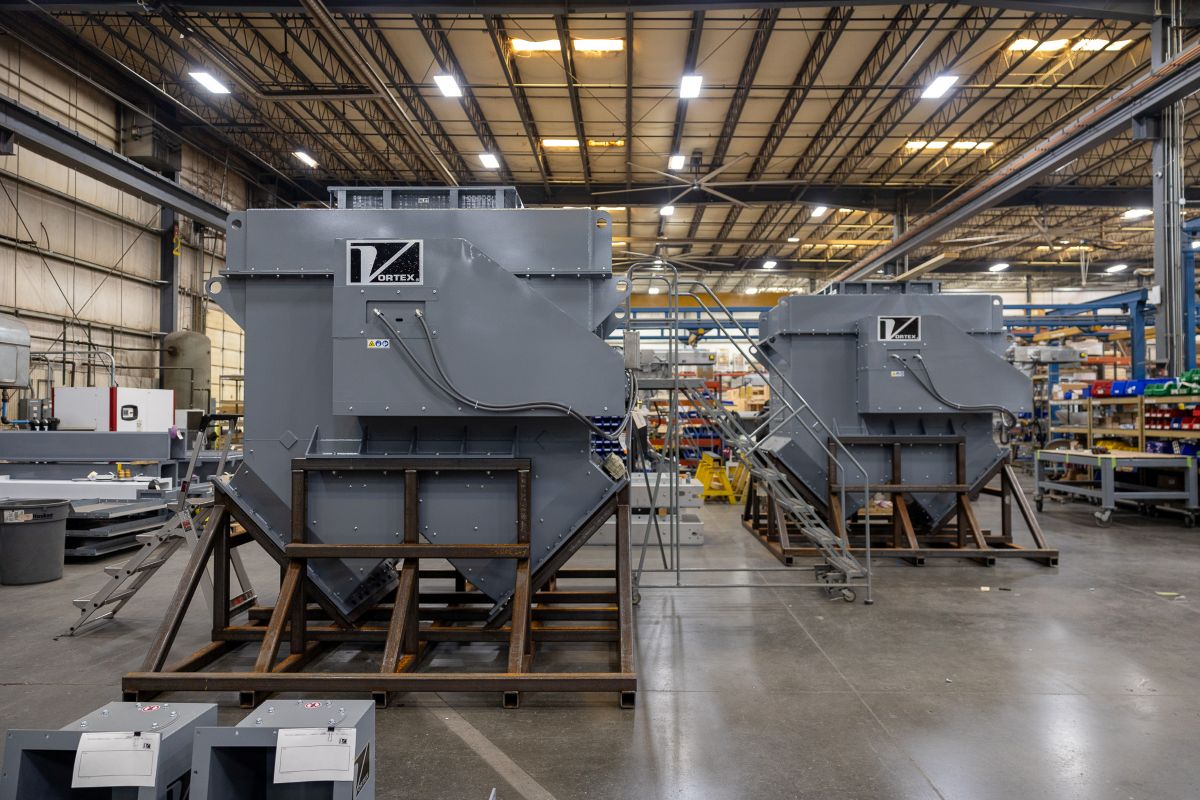
The answer lay in the deployment of two Vortex Model No. PC1000-2CS-45-CCL-V212726 Pivoting Chute Diverters. These are not standard valves; they are 1000mm (approximately 40 inches) heavy-duty units designed specifically for this application.
The engineering team focused on three core pillars during the design phase: material hardness, structural integrity, and maintenance accessibility.
Material Selection: Combatting Abrasion
To address the wear characteristics of soybean meal, Vortex moved beyond standard steel construction for all material contact areas. While the exterior valve body is constructed of robust carbon steel to provide structural rigidity, the internal components—the "wetted" parts that actually touch the product—utilize Chromium Carbide.
Chromium Carbide is an extremely hard, wear-resistant material often used in mining and heavy industrial applications. In these diverters, it is utilized extensively:
- Inlet Chute & Internal Pivoting Chute: Both are replaceable and constructed of Chromium Carbide.
- Outlet Chutes & Bottom Liner: The areas experiencing the most friction as material exits the valve feature replaceable Chromium Carbide liners.
- Containment Bar: The interior juncture of the outlet legs includes a specialized wear-resistant bar to prevent premature erosion at the split point.
This specific configuration ensures that the valve body remains intact for decades, while the liners absorb the punishment of the material flow.

Forward-Thinking Maintenance Design
In the dry bulk handling sector, Vortex design philosophy accounts for the fact that all mechanical equipment will eventually require maintenance. A forward-thinking design does not pretend wear won't happen; instead, it makes the remediation process efficient and safe.
This project utilized a unique Large Pivoting Chute Design (V212732) that fundamentally changes how maintenance teams interact with the equipment. Key features include:
Removable Upper Assembly
In a traditional setup, replacing a worn internal chute might require removing the entire diverter from the process line—a crane-intensive operation that can halt production for days. For these units, the upper portion of the valve is designed to be removable. This allows maintenance crews to lift off the top section and access the internal chute directly for replacement without uninstalling the main body of the diverter.
Robust Internal Components
The internal chute itself is engineered with substantial thickness to prolong maintenance intervals. The chute is 3/4" thick, and the replaceable liners are 1/2" thick. This extra material provides a significant buffer against abrasion, extending the service life of the unit well beyond standard industry expectations.
In-Line Inspection
For routine checks, the diverters feature a removable access cover. This allows operators to visually inspect the internal condition of the valve without removing it from service, facilitating better preventative maintenance planning.
Technical Specifications and Performance
The operational requirements for this project demanded precision control alongside brute strength. The technical specifications of these diverters reflect a commitment to high-performance standards.
Actuation and Control:
Reliable movement is powered by two 8-inch bore double-acting air cylinders. These massive actuators provide the force necessary to shift the heavy internal chute through the material stream if necessary, although gravity flow management is the primary function. The valve body is also pre-designed to accept proximity switches, allowing for seamless integration into the facility's automated control system (PLC) for real-time position feedback.
Thermal Resilience:
Processing environments can fluctuate in temperature. These units are rated for continuous temperatures up to 400°F (204°C), ensuring that heat generated during processing or ambient environmental factors do not compromise seal integrity or mechanical function.
Geometry and Flow:
The outlets are offset symmetrically 45° from the vertical valve centerline. This geometry is critical for maintaining material velocity while minimizing impact angles that accelerate wear. The square inlet and outlets feature drilled flat flanges, ensuring a secure, dust-tight bolt-through connection to the surrounding ductwork.
Conclusion
The successful commissioning of these 1000mm Pivoting Chute Diverters represents a significant upgrade for the facility’s grain handling capabilities. By investing in specialized materials like Chromium Carbide and prioritizing maintenance-friendly design architecture, the processor has effectively future-proofed this section of their production line.
As the demand for agricultural commodities continues to grow, the machinery that processes them must evolve. This project serves as a case study in how advanced engineering and strategic material selection can solve the age-old problem of abrasion in dry bulk handling, ensuring that operations remain efficient, safe, and profitable for years to come.
Contact Us today to learn how Vortex can help you with an equipment solution for your abrasive material handling needs.